

Turbocharger Endorsement
Aviation Turbocharger and Supercharger difference training. Version V1.1
These slides are part of my Turbocharger briefing, intended for face-to-face delivery to facilitate interactive questions. Feel free to leave any comments or questions below. As a reminder, always consult your Pilot's Operating Handbook (POH) and instructor regarding the content of this blog.
Slide 1
Slide 2
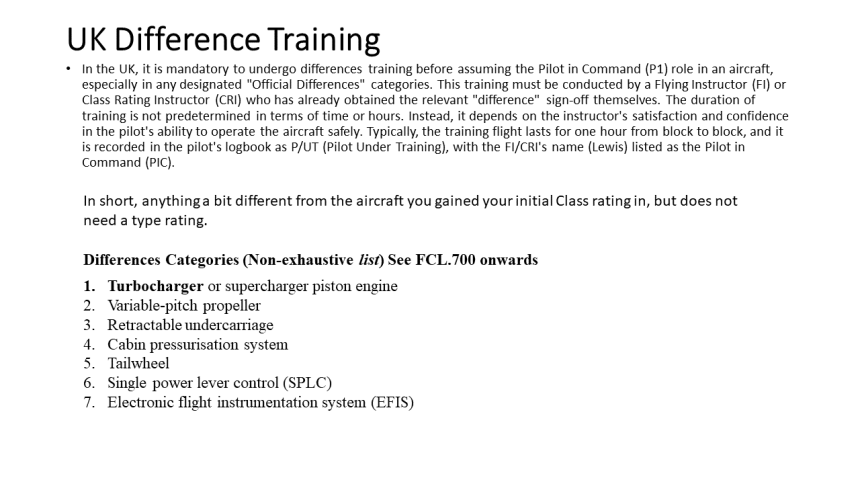
Aviation difference training extends beyond the mere provision of straightforward answers to basic questions; it delves into the realm of stimulating unasked questions, encouraging pilots to think beyond conventional boundaries. This approach fosters a deeper understanding and awareness, integral to developing Threat and Error Management (TEM) frameworks. By challenging pilots to consider scenarios they might not have previously contemplated, difference training cultivates critical thinking and adaptability. These newly raised questions and subsequent answers become pivotal in shaping a robust TEM strategy, enhancing a pilot's ability to anticipate, identify, and effectively manage potential in-flight threats and errors. This proactive and comprehensive approach to training is crucial in aviation's dynamic and sometimes unpredictable world, where the ability to think critically and respond effectively can make all the difference.
Slide 3
Slide 4
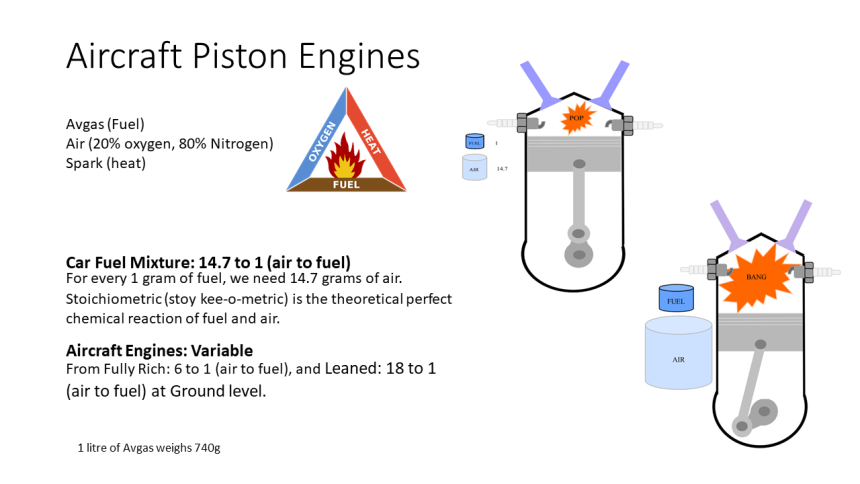
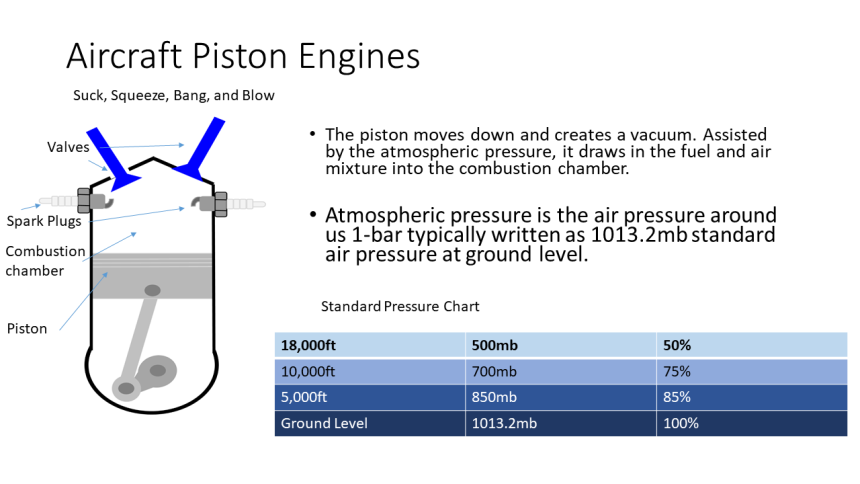
The optimal air-to-fuel ratio for a car is 14.7 to 1, but when piloting an aeroplane, we can modify this mixture to suit our needs. The depicted ratio shows 1 gram of fuel to 14.7 grams of air. I described this as POP rather than a bang, and how we need more fuel to create more power, but...
For a Lycoming four-cylinder engine consuming 20 litres of fuel per hour, the calculation reveals that each ignition uses approximately 0.21 grams of fuel. Remember, each piston only intakes fuel every second rotation (the "Suck" phase). Corrections or additional insights are welcome!
Slide 5
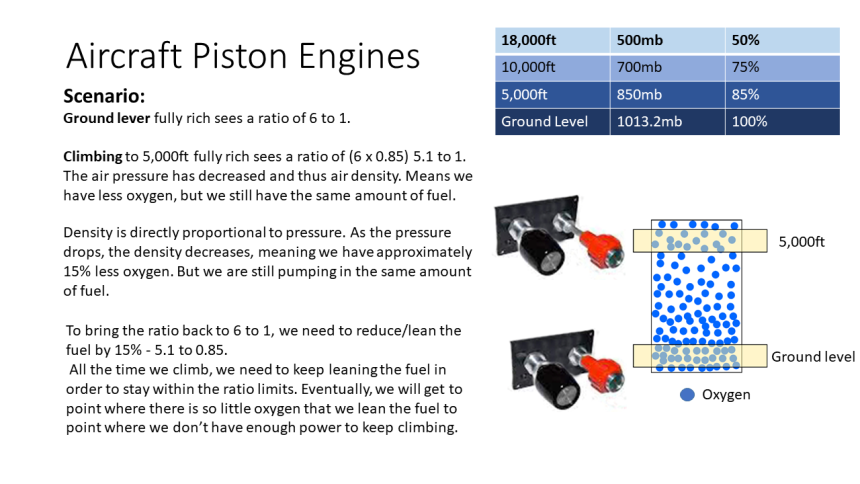
Slide 6
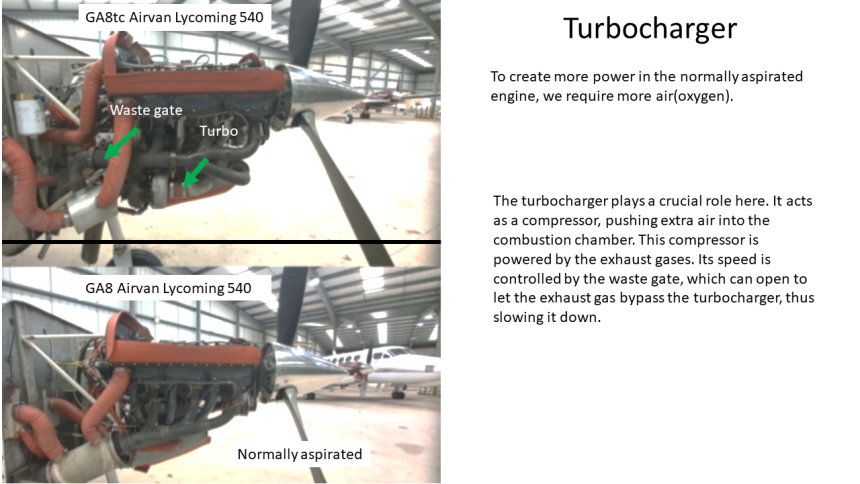
The lower image displays a normally aspirated Lycoming 540 engine on a Gibbs GA Airvan, while the upper image features the same aircraft and engine type, but equipped with a Turbocharger. It's important to note that these are two distinct aircraft; the turbocharger isn't an upgrade option for the normally aspirated version. Observe the modification in the exhaust system where both sides converge into a single pipe. This pipe then channels exhaust gases to the turbocharger unit, which is regulated by the wastegate.

Slide 7
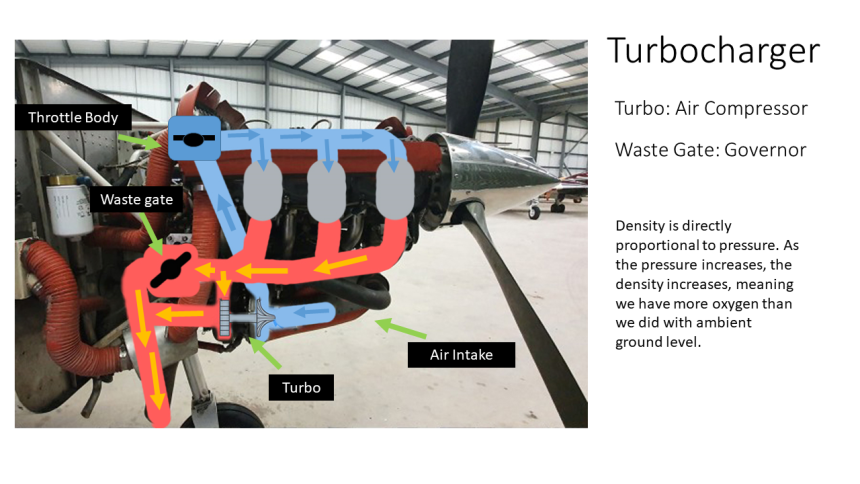
When the wastegate is closed, all exhaust gases are directed to drive the turbine side of the turbocharger. If the wastegate is open, some exhaust gases can bypass the turbocharger, allowing control over its speed. On the other hand, a supercharger, which also functions as an air compressor, is directly driven by the engine. This direct connection means its speed cannot be independently controlled as it is directly correlated with the engine's RPM.
Slide 8
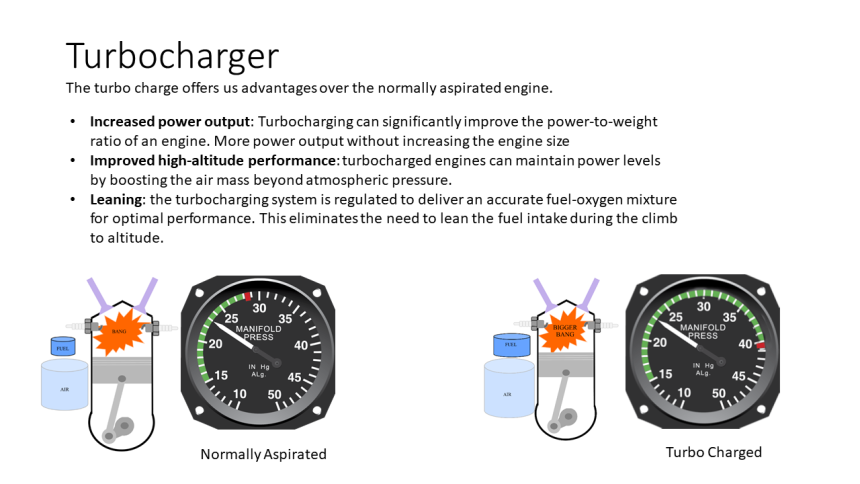
Slide 9
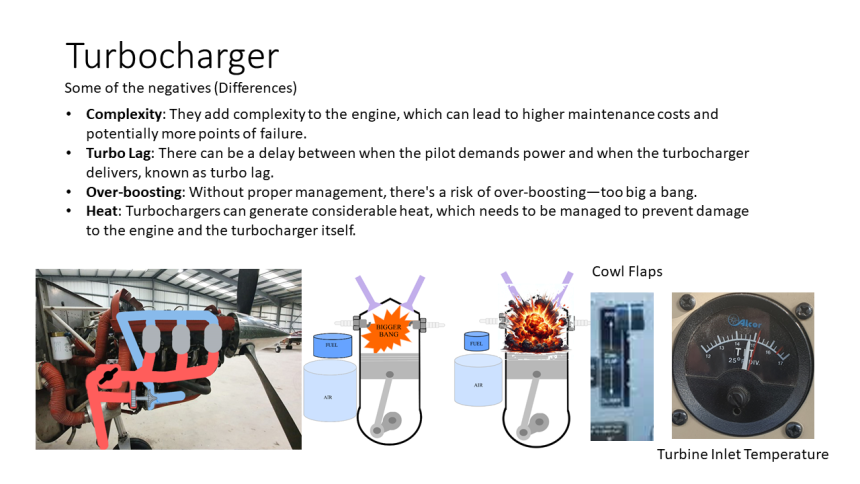
Managing increased power and heat in turbocharged aircraft involves integrating additional elements like cowl flaps and other instruments into our checklists and cockpit workflows.
Turbo lag in aviation is the delay in power response after a pilot adjusts the throttle in a turbocharged engine. This is due to the time required for exhaust gases to speed up the turbocharger's turbine, which compresses air and enhances engine power. Larger turbochargers, needing more time to reach effective speeds, make this more evident. The impact of turbo lag is significant, especially during critical phases like takeoffs and climbs, where prompt power response is crucial. Some manufacturers have developed various solutions to minimize turbo lag, while others require the pilot to manage and handle them directly.
Overboost in turbocharged engines occurs when the intake manifold pressure surpasses the manufacturer's specified maximum. This often happens during high-power demands, like takeoff or climbing. Excessive compression of air by the turbocharger leads to over-boost, potentially causing engine damage, detonation, and shortened engine lifespan.
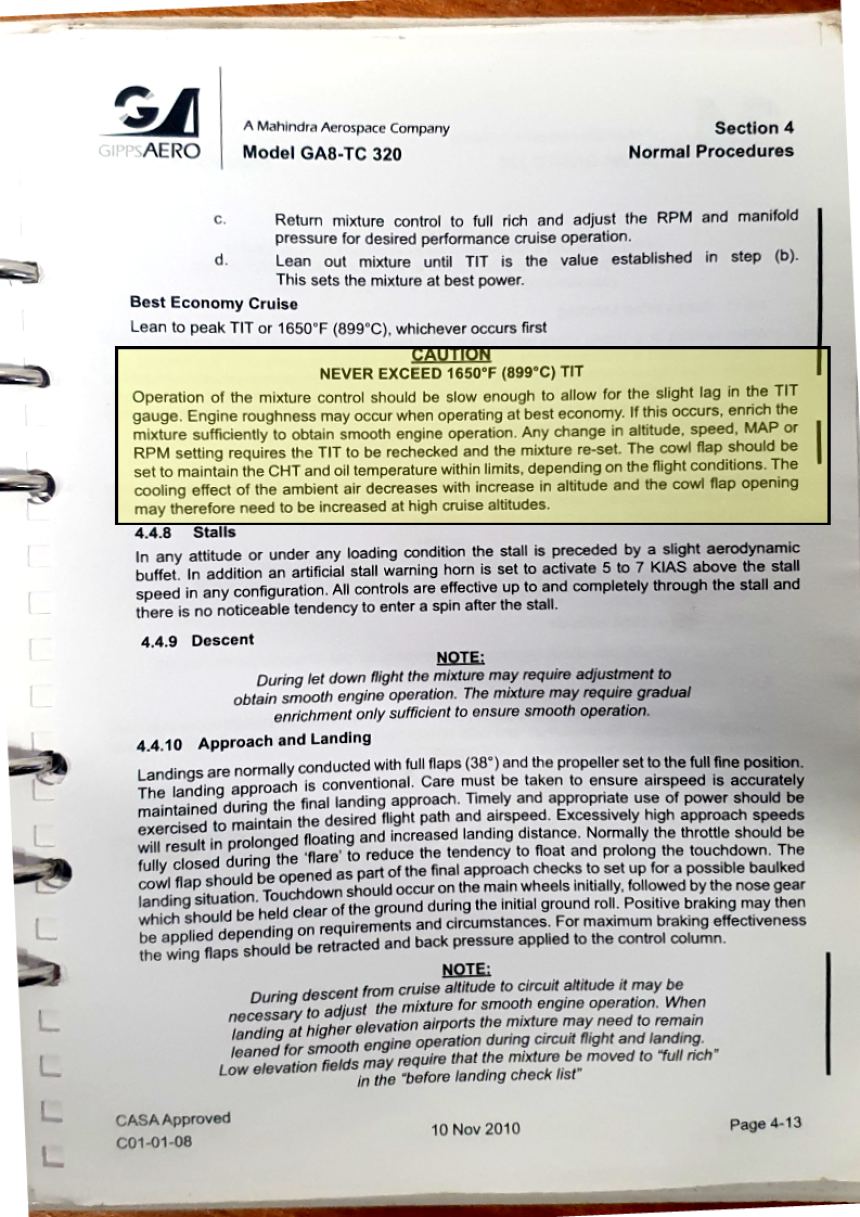
With the additional power comes increased heat. Therefore, when leaning the engine, it's vital to monitor the Turbine Inlet Temperature (TIT) instead of the Exhaust Gas Temperature (EGT), ensuring the engine operates within safe thermal limits.
Slide 10
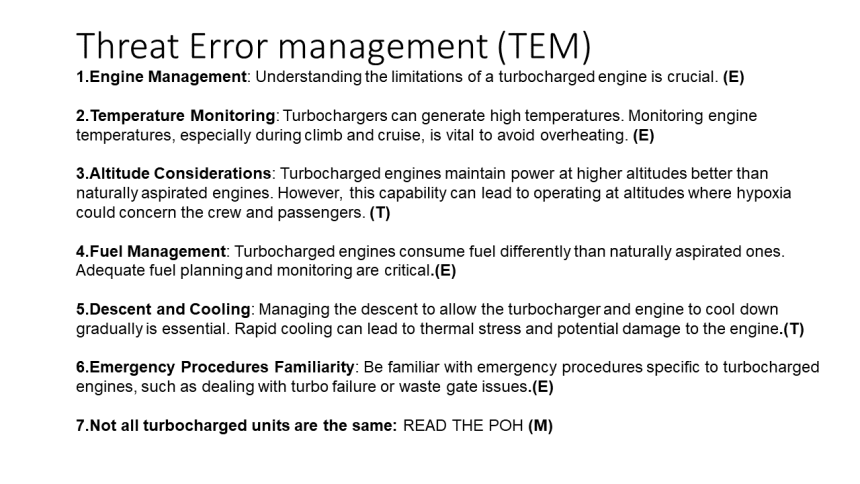
Threat and Error Management (TEM) is essential in all aspects of flying, particularly when navigating the complexities of aviation. The list provided earlier serves merely as an example and is not exhaustive. It's important to continuously apply TEM principles to ensure safe and efficient flight operations.
Slide 11
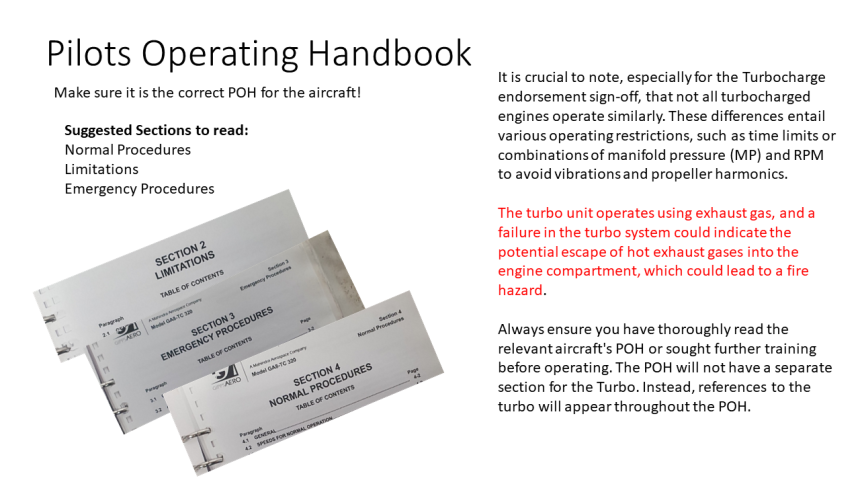
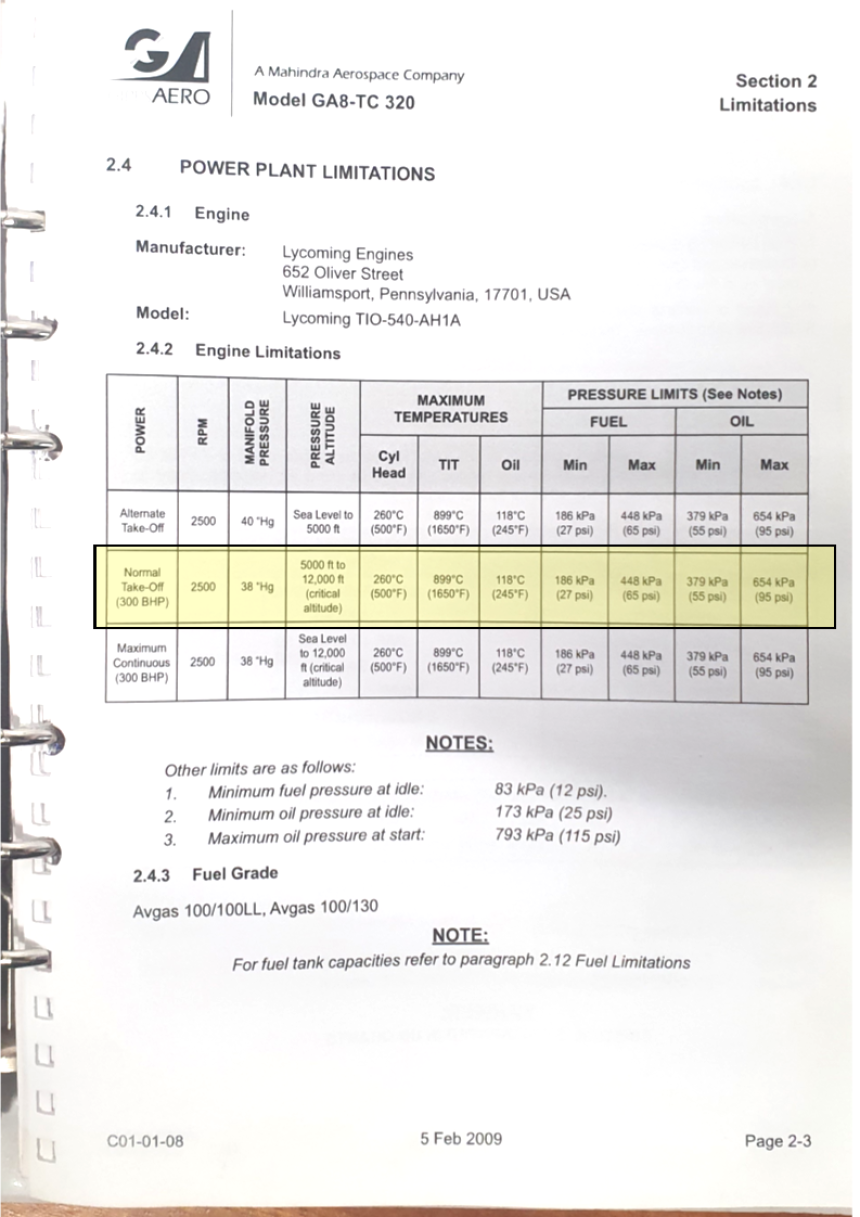
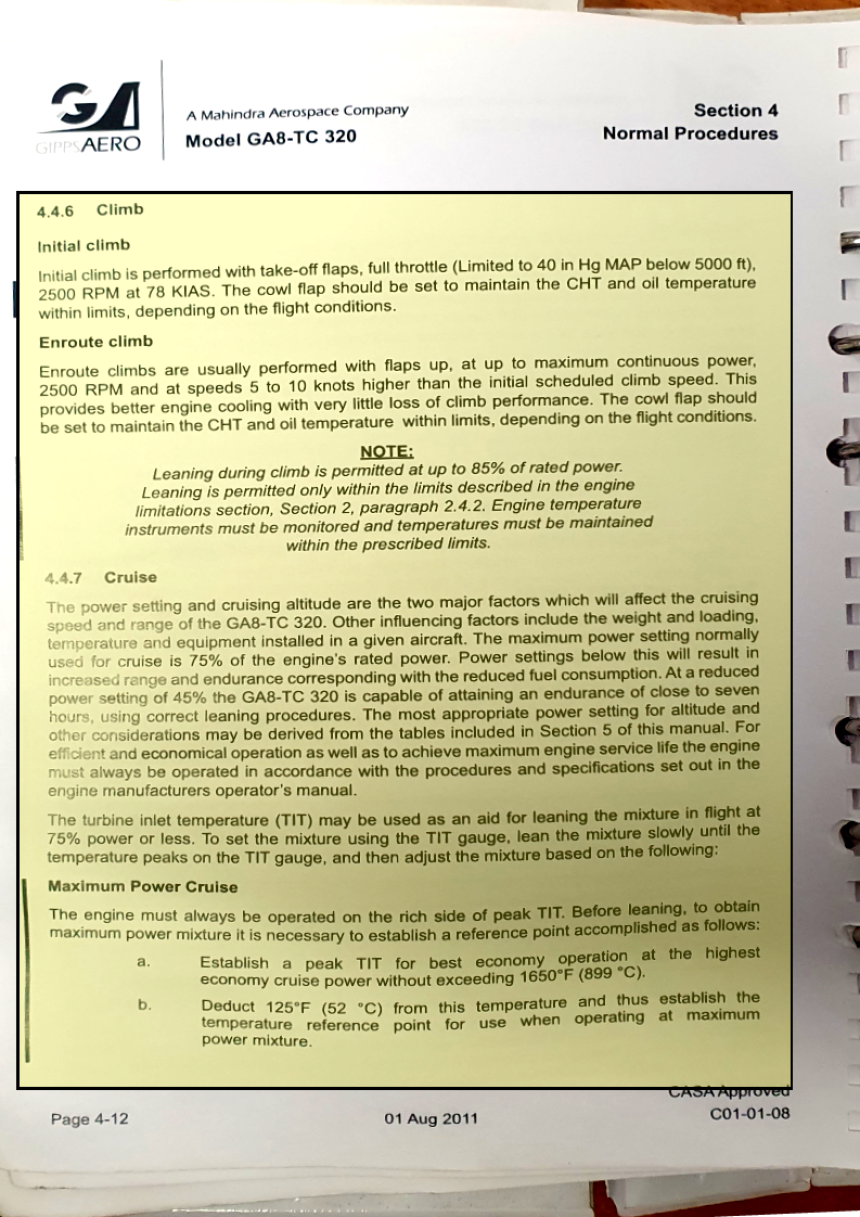
The Pilot's Operating Handbook (POH) may not have a dedicated section outlining the differences in turbocharged aircraft, so it's crucial to thoroughly review the entire POH to avoid missing critical information. The increased power from a turbocharger can alter some "rule of thumb" procedures that were applicable in other aircraft. For instance, during Constant Speed Difference training, you might have learned to correlate manifold pressure (MP) and RPMs, like 24 inches of mercury (inHG) at 2400 RPM or 23 inHG at 2300 RPM. However, manifold pressure can reach up to 40 inHG with a turbocharged engine.
For the GA8tc Airvan, the suggested cruise settings are now 75% power at 28 inHG and 2500 RPM, and 65% power at 25 inHG and 2400 RPM. The extracts from the GA8tc POH provided here are for illustrative purposes only and should not be used for actual flights, as they may not reflect the latest updates. They demonstrate how crucial turbo-related information is dispersed throughout the POH.
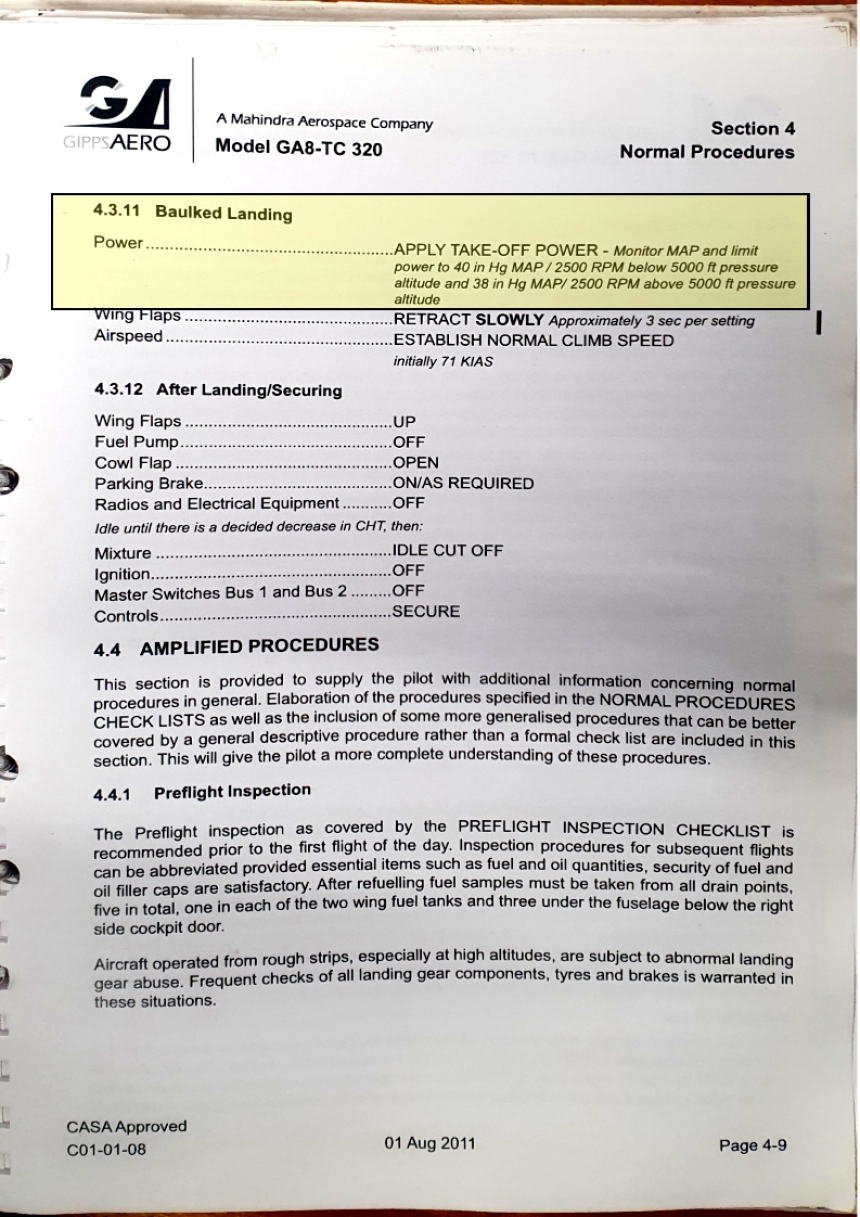
When executing a go-around in a turbocharged aircraft, full power application needs to be reassessed due to turbo lag and altitude restrictions on full power. This re-evaluation is essential for ensuring safe and effective manoeuvring under these specific engine conditions.
POH
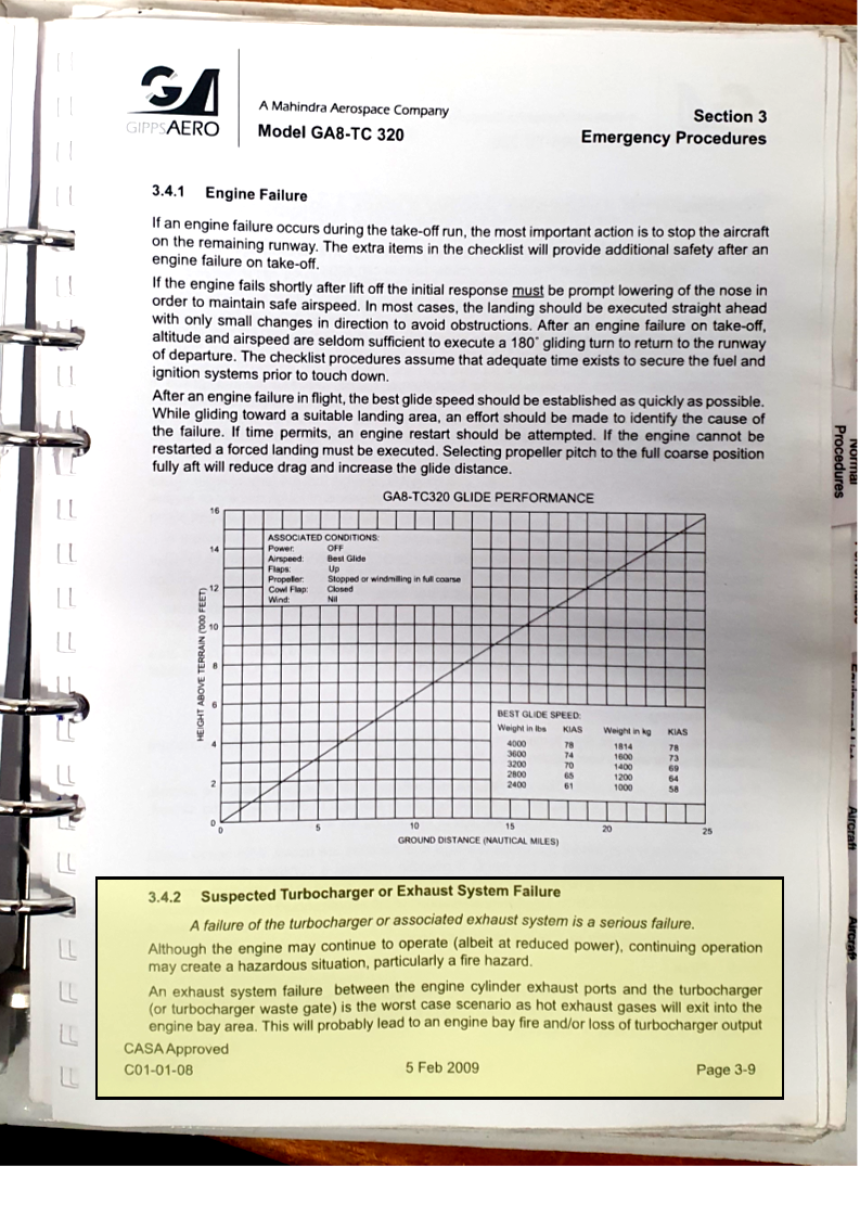
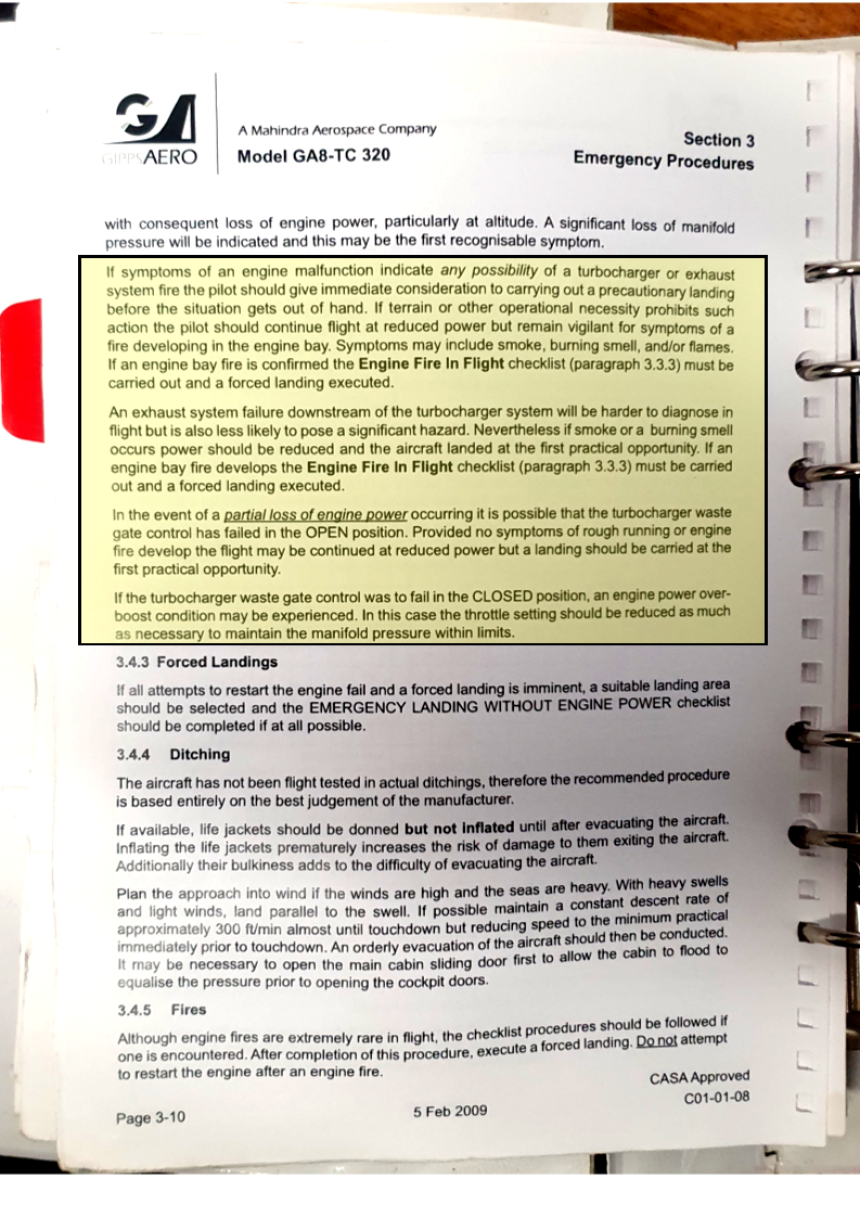
The sections highlighted in yellow within the Pilot's Operating Handbook (POH) are particularly relevant when transitioning to a turbocharged aircraft from one with a normally aspirated engine. These highlighted sections underscore the critical differences in operating parameters, performance characteristics, and engine management techniques unique to turbocharged systems. As a pilot, you must assimilate this information into your cockpit management routines. This may involve updating existing mnemonics, adapting cockpit flow processes, and revising rule-of-thumb methods to accommodate the nuances of turbocharged engine operation. Such adaptations are essential for ensuring safe and efficient flight, as turbocharged engines have distinct operational considerations, including temperature management, throttle handling, and altitude performance. Integrating these changes into your flying practice is not just about memorising new procedures; it's about understanding the underlying principles that drive these differences, ensuring a seamless and safe transition to flying turbocharged aircraft.


Gaining Sponsorship from Skydiving Equipment Manufacturers
Strategies for Visibility and Event Weekends
